![hdr_logo.png]](https://go.ninesliving.com/hs-fs/hubfs/j1640189779864/hdr_logo.png?height=40&name=hdr_logo.png)
Permission roles determine what users can see and do in Nines. Each user must be assigned a role, which defines their access to different sections of the platform and the actions they can perform.
Default permission roles
Nines provides three default roles:
- Admin
- Manager
- Viewer
These preset roles offer different levels of access, making it easy to assign permissions without configuring each setting individually.
Assigning or changing a user's permission role
You must have the appropriate permissions to manage user roles.
- Navigate to Household > Users in the left-hand menu.
- Select the user whose role you want to update.
- Choose the appropriate permission role.
- Save your changes.
Multiple users can share the same role, or you can assign different roles based on their responsibilities.
Creating and managing custom permission roles
If your account includes advanced permission management, you can create custom roles tailored to specific responsibilities.
For example, you might create:
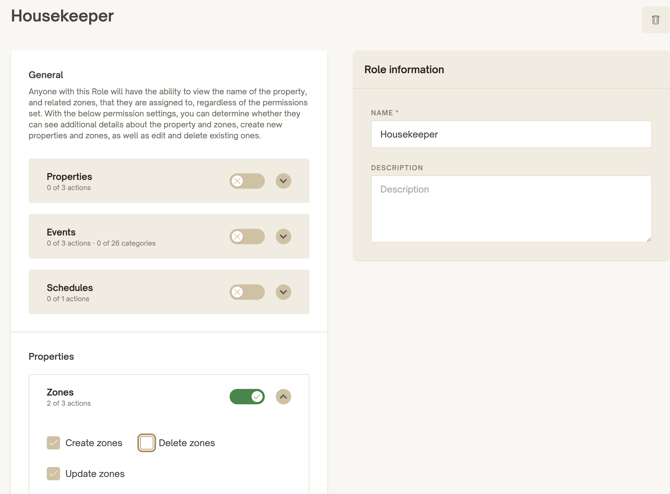
- Housekeeper: Access to relevant housekeeping information and tasks.
- Property Manager: Broader access to manage day-to-day property operations.
- Renovation Contractor: Limited access to renovation-related information.
- Fleet Manager: Only having ability to view, create, and edit information
Custom roles allow you to configure permissions for different sections of Nines, including whether users can:
- View information
- Create new information
- Edit existing information
- Delete information
You can also configure whether a role allows users to view sensitive fields.
Once created, custom roles can be assigned to multiple users, helping you maintain consistent permissions across your team.
Best practice: Keep your permission roles simple. Create custom roles for groups of users with similar responsibilities rather than creating a separate role for every individual.
Permission roles vs. property access
Permission roles control what users can do, but not which properties they can access. Even users with an Admin role must be granted access to individual properties.
Learn more about managing a user's access to properties.